
About All Things Japan
The trust layer between Japanesemakers and global markets.
All Things Japan is a Japan-first export enabling platform. We help Japanese makers sell overseas while helping global buyers find and buy from them with clearer information about the maker, the product and its origin. Every product comes from a named Japanese maker we've reviewed, and it ships from Japan.
The problem
Why ATJ exists
People everywhere want Japanese products. But a good product is not enough any more. Buyers want to know where it came from, that the details are right, and that it will actually arrive.
The usual ways to export make makers give something up:
Margins
Wholesale terms that do not leave enough to keep making the thing properly.
Names
Marketplaces that drop the maker's name and where it came from.
The paperwork
Language, regulations and shipping that can stop makers before they start.
The process
How ATJ works
Makers apply
A short application, in Japanese. Nothing goes live on its own. We review every maker first.
Products and readiness are reviewed
We confirm where it is made, who makes it and how it ships before we show it to anyone. If it is not made in Japan, it is not on ATJ.
ATJ prepares the listing
We write the English product page. It goes live only after the maker approves it.
Small orders test real demand
Buyers order from Japan and we watch how the product does before anyone scales up.
Proven products move toward B2B
When demand holds, we open the conversation with business buyers about repeat orders.
Some products start with individual buyers, some with businesses, some with both. It depends on the product and how ready the maker is. When a product proves itself, we help it grow into repeat and larger orders.
What we stand for
Our principles
What ATJ protects Protect
- Trust in origin
- The maker's brand value
- Accuracy of product information
- Long-term relationships with buyers
We do not discount or reposition anything without the maker's say-so.
What ATJ never does Never
- Use relabelling or repacking as a shortcut around export or destination requirements
- Discount without the maker's consent
- Sell with ambiguous origin or story
- Publish unverified products to buyers
- Trade brand value for short-term sales
ATJ is not a discount site. We help makers in Japan sell overseas without giving up who they are.
We are not trying to be the biggest.
We aim to build the one makers and buyers trust.
A personal note
From the founder
I have lived in Yokohama, Japan for more than thirty years. For much of that time, I worked in supply chain management and analysis with the U.S. Navy and as a U.S. civil servant, all while based here in Japan.
But the idea behind All Things Japan started much more simply.
Friends, colleagues and family would visit Japan, discover something they loved, go home, and then ask me, “Harry, can you get this for me?”
It happened again and again.
I started asking myself why so many excellent Japanese products could be easy to find here in Japan, yet so difficult to buy once you were overseas.
That question led me to trade shows across Japan and, more importantly, to the makers themselves. Over time, I spoke with more than 200 of them. Different products, different regions, different companies, but many of the same concerns kept coming up: language, paperwork, compliance, logistics, and uncertainty about how to reach overseas customers without losing control of their brand.
What I kept seeing was not a shortage of good products or capable makers. The gap was between making something worth buying and being ready to sell it internationally.
By February 2020, I had decided to create All Things Japan.
Then the pandemic arrived.
Almost overnight, travel stopped and much more of everyday life moved online. I had already decided to build ATJ, but that period made the importance of ecommerce impossible for me to ignore. If Japanese makers were going to reach customers beyond Japan, digital commerce was going to matter more, not less.
I also knew something else. I did not yet know enough about ecommerce.
So I learned. Fast.
In July 2020, I registered All Things Japan in Yokohama and began working on a better way for Japanese makers to reach customers overseas under their own name, with their story intact and with control over how their products are presented and sold.
That remains the reason I am building ATJ today.
I am still directly involved in the makers we work with and in what is approved to go live. ATJ will grow, but I do not want growth to come at the expense of the trust between the maker, ATJ and the buyer.
That trust is what we have to earn every time.
Harry WrightFounder & CEO, All Things Japan GKYokohama, Japan
Makers on the platform
Now live
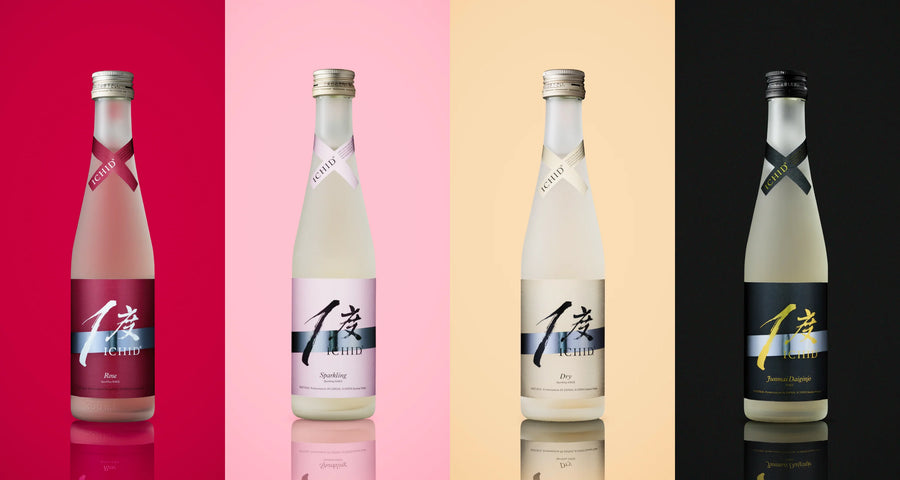
ICHIDŌ
Fukushima · JapanSparkling sake brewed at Ninki Shuzo in Nihonmatsu. A modern sake made to be shared, presented with its origin and story intact, shipped from Japan.
See the story →
Organic Gyokuro “HI”
Kagoshima · JapanShaded loose-leaf gyokuro from Kagoshima, created through OOTC's evaluation, selection and blending, with finishing in Kanoya.
See the story →Sourcing from Japan
For global buyers
Before anything goes live we confirm where it is made, who makes it, how it ships and that the product details are right. We write the page for overseas buyers and the maker signs it off.
Retailers, restaurants, hotels, gifting teams, trading firms and importers can start with a small order, or just a conversation, and see where it goes.
Choose your door
Where would you like to start?
I want to buy curated Japanese products
See what's live now, direct from named makers in Japan.
See what's live → For business buyersInterested in sourcing for your business
Retailers, restaurants, hotels, corporate gifting teams, importers, and institutional buyers can contact ATJ to discuss availability and next steps.
Discuss a business inquiry → 作り手のみなさまへI make products in Japan
審査制・日本語対応。Application-only, in Japanese, at your pace.
Apply as a supplier →Institutions, partners and media: contact ATJ.
All Things Japan GK
The operating company
ATJ is run by All Things Japan GK in Yokohama. We work from the Japan side, closing the gaps in information, language and trust between Japanese makers and the world.
How ATJ operates
ATJ is founder-led. ATJ approves every maker and every product before it goes live. Nothing is published automatically. A technology partner builds the platform, and a Japan-based specialist handles Japanese-language onboarding and maker contact. Software helps with the work, but accountable human review remains wherever a decision materially affects trust, compliance or what goes live.
Purchases & Shipping
Unless otherwise stated on the product page, orders are fulfilled and shipped from Japan.